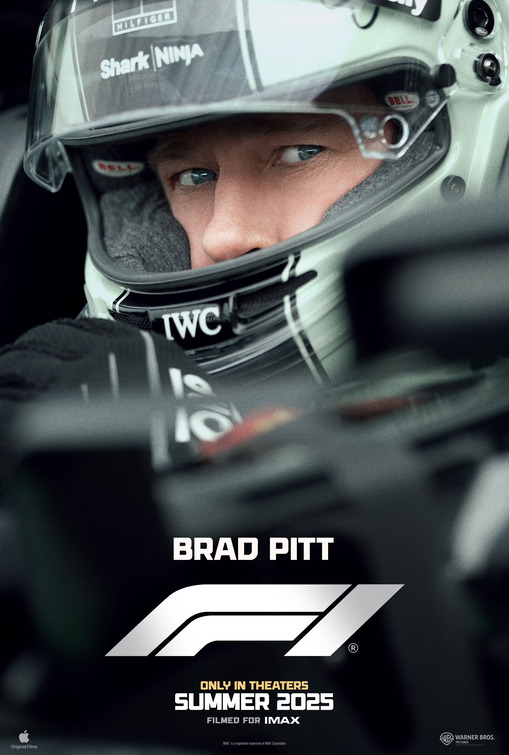
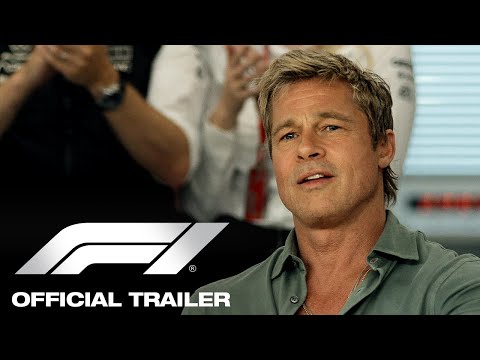
Joseph Kosinski built his career on making impossible-looking machines feel tactile, and F1 continues the visual project of Top Gun: Maverick with an even harder trick: making a fictional Formula 1 season feel indistinguishable from the real thing. Brad Pitt's Sonny Hayes is a washed-out ex-prodigy dragged back onto the grid to mentor a hotshot rookie, played by Damson Idris, and salvage a struggling fictional team called APXGP. The plot beats are familiar underdog-sports-movie architecture, but Kosinski treats the mechanics of racing — pit strategy, tire wear, the psychology of drafting a rival — with enough specificity that it never plays as decoration around the drama.
What makes the film work is the way Kosinski refuses to fake the speed. Pitt and Idris trained for months, working up through Formula 4, 3 and 2 cars before driving specially rigged F2 chassis on their own, on real circuits, with camera equipment mounted directly to the cars. That commitment shows up on screen as texture you can't storyboard your way into — the vibration, the wind noise, the way a car's back end steps out a half-second before the driver corrects it. Kerry Condon's technical director and Javier Bardem's team owner give the pit-lane scenes their own charge, keeping the human drama from getting lost between races.
The fastest racing footage a studio movie has ever put on screen, wrapped around a familiar underdog story.
The production leaned all the way into authenticity rather than simulating it: Apple and Bruckheimer's team shot at actual Grand Prix weekends, including the 2023 British Grand Prix and the 2024 Abu Dhabi finale, weaving real drivers like Max Verstappen, Fernando Alonso and Carlos Sainz into the footage. Seven-time champion Lewis Hamilton, an executive producer on the film, pushed for that level of realism and makes a cameo of his own. It's the kind of access most racing films never get, and it grounds even the film's more soap-operatic beats — team betrayals, sponsor pressure, a career-ending crash in Sonny's backstory — in a world that looks and sounds like the sport fans actually watch.
Reviews landed strongly, with Rotten Tomatoes settling in the low-to-mid 80s among critics and audiences responding even more enthusiastically, backed by an A CinemaScore. It became the highest-grossing sports film ever made and one of the biggest original live-action openings in years, a rare box-office win for a movie that isn't a sequel, remake or adaptation. Whatever cliché lives in its script, the racing footage stands as the best the genre has produced, and it's turned Pitt, in his sixties, into the face of a sport trying to widen its audience beyond the paddock.
Getting that level of access took real institutional muscle: securing sign-off from the FIA and all ten actual Formula 1 teams to film during live race weekends reportedly took more than a year of negotiations before a single frame was shot. Mercedes team principal Toto Wolff was directly involved in engineering the film's solution to the speed problem, helping adapt Formula 2 chassis into cars that could pass for F1 machinery on screen while staying survivable at racing speed. Apple built custom camera rigs for the job too, working with Panavision on remote-operated mounts, up to fifteen points per car carrying as many as four cameras at once. None of that comes cheap: reported budgets range from $200 million to $300 million depending on the source, and the film has since crossed $550 million worldwide.