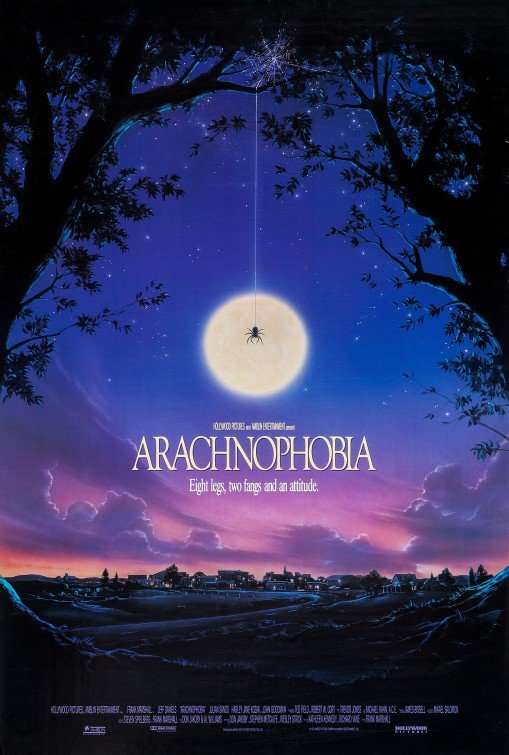
Arachnophobia earns its reputation as one of the most purely enjoyable creature features ever made, balancing real scares with a warm, comic sense of small-town character that keeps the film from ever feeling mean-spirited. Frank Marshall, making his directorial debut after years producing for Spielberg, clearly understands pacing and misdirection, building genuinely effective jump scares out of practical spider effects rather than cheap tricks. Jeff Daniels is perfectly cast as an everyman doctor whose own phobia makes him the last person anyone expects to save the day, and John Goodman steals scenes as an overenthusiastic exterminator.
The film's tone is its best trick: it's scary enough to satisfy horror fans while staying light enough to hand to someone who normally can't handle the genre at all. That balance, often labeled a 'thrill-omedy' at the time, has aged remarkably well, since the practical spider work still holds up far better than most CGI creature effects from the same era. It never leans on gore, instead building dread through sheer numbers and the uncanny reality of hundreds of real spiders crawling through a family home.
Real spiders, real scares, and just enough comedy to make it a crowd-pleaser.
This is an easy, confident recommendation for a Halloween watch with people who don't usually like horror, since it's genuinely funny without undercutting its own tension. It's also a great pick for viewers curious about practical effects filmmaking, given how much of its impact comes from real animals rather than digital trickery. Few films manage horror-comedy this evenly, and Arachnophobia remains one of the best gateway titles into the genre for exactly that reason. Decades later, it still holds up as one of the most rewatchable studio horror films of its era.
Arachnophobia holds a notable place in studio history as the first film released under Hollywood Pictures, the Disney-owned label created to handle more adult-oriented material than the main Disney banner. Steven Spielberg's Amblin Entertainment produced it, and Frank Marshall, a longtime Spielberg producing partner, used it as his feature directorial debut. The production reportedly used hundreds of real Avondale spiders imported from New Zealand for the practical effects, with trainers guiding the spiders around sets using heat and cold rather than digital enhancement. The film performed well commercially and critically on release, and its legacy even reached science: researchers later named a parasitic worm species after Jeff Daniels' character in recognition of the film.
Arachnophobia sits in a specific and beloved lane of early-1990s studio filmmaking, alongside other horror-comedies that prioritized craft and character over gore or shock value. It's aged into something of a comfort watch for horror fans, precisely because its practical effects and restrained tone haven't dated the way CGI-heavy creature features from the same decade have. It's a particularly good fit for anyone easing a spider-phobic friend into horror movies, since the film's own hero shares that exact fear and the story treats it with genuine empathy rather than ridicule. Few studio horror-comedies from any era have aged this gracefully.