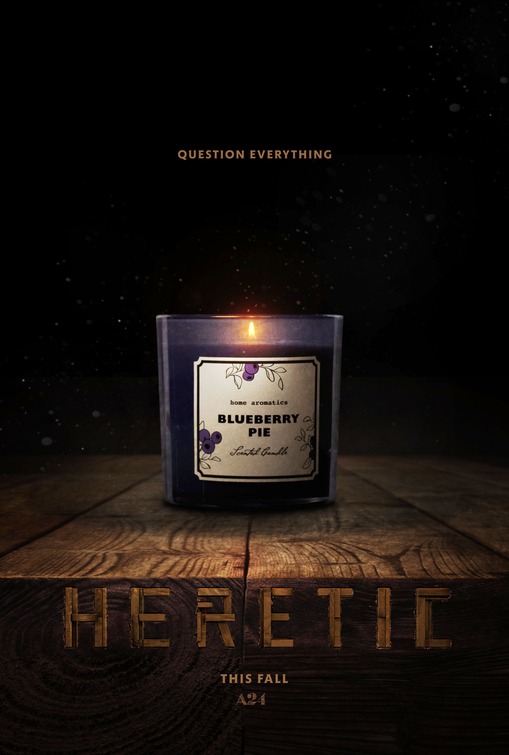
Heretic works because it refuses to let its premise stay a gimmick. Scott Beck and Bryan Woods build the first act almost entirely out of conversation, letting Mr. Reed pepper Sister Barnes and Sister Paxton with questions about Monopoly, pop songs, and the mechanics of belief before the walls of his house start rearranging the rules of the encounter. The pacing is patient in a way horror rarely allows itself, trusting dialogue to generate dread instead of leaning on jump scares. By the time the house reveals its actual architecture, the film has already won the more difficult argument: that a debate about religion can be as frightening as a chase.
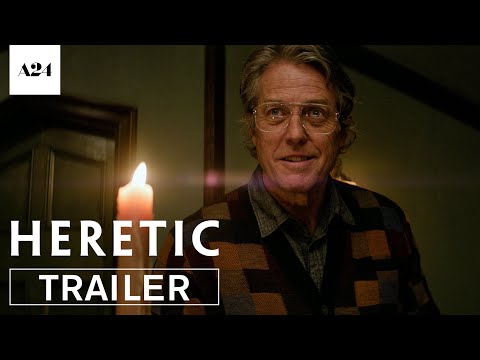
Hugh Grant is the reason the whole structure holds. He plays Mr. Reed with the same rambling, self-deprecating charm he built a career on in romantic comedies, then curdles it degree by degree until the charisma itself becomes the threat. It's a performance built on control of tempo — he lets silences stretch, lands jokes at the worst possible moments, and never raises his voice because he doesn't need to. Sophie Thatcher and Chloe East match him by playing the missionaries as devout believers first and horror-movie naifs second, so their arguments with Reed carry real theological weight instead of feeling like setup for the next scare.
Two missionaries, one house, and a host whose questions are the real trap.
Beck and Woods, previously known for co-writing A Quiet Place, have said Reed's mixture of charm and control was shaped partly by research into real cult leaders and doomsday theorists, which explains why his monologues about the history of belief systems land with unsettling specificity rather than generic movie-villain menace. The directors also shot much of the film on a single, meticulously designed house set, engineering it so the geography could shift subtly as the missionaries lose their bearings — a production choice that mirrors the story's central trick of making the audience doubt what it thought it understood about the space, and about Reed himself.
Critics were unusually warm to a studio horror release, with Heretic landing around 90% on Rotten Tomatoes and a solidly positive Metacritic score, reviewers singling out Grant's performance as a career highlight. It grossed roughly $59 million worldwide against a modest budget, a strong result for A24's mid-budget horror slate, and it's since become a reference point for how much tension a script can wring from argument alone. For a genre often measured in body count, Heretic's legacy is proving that a house with three people talking can be scarier than one with a monster in it.
Hugh Grant's performance followed him well into awards season, picking up a Golden Globe nomination and a Critics' Choice nomination, an unusual trajectory for a horror performance in a genre the major awards bodies rarely acknowledge. Heretic also turned into a genuine commercial success rather than just a critical one, climbing into A24's ten highest-grossing domestic releases of all time, an impressive feat for a three-hander built almost entirely around dialogue in a single house. Rotten Tomatoes' official critics' consensus credits Grant with having "infectious fun playing against type," which doubles as a fair summary of why the whole film works as well as it does.