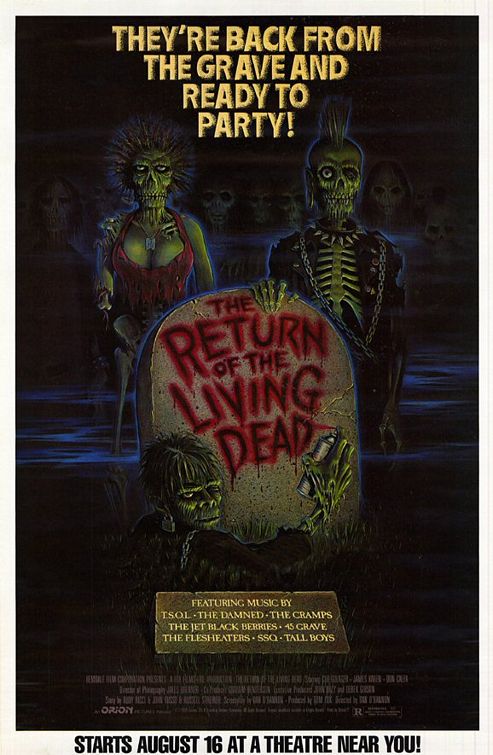
If you think you already know what a zombie movie is supposed to do, this one is happy to argue with you at every turn. It moves fast, lands jokes constantly, and stays genuinely alarming the whole way through, because it never lets the comedy fully cancel out the dread underneath it. The dead here don't shuffle politely toward the exits, they run, they scream, they reason, and they talk back, and that single choice makes the whole film feel more dangerous and unpredictable than most of what came before or after it in the wider genre.
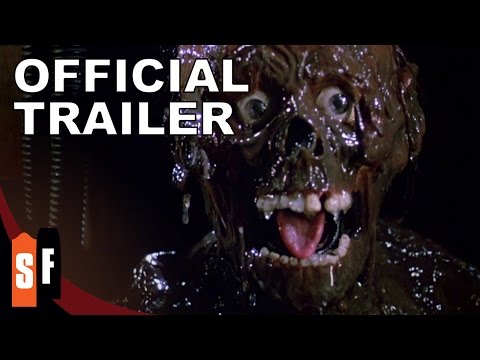
The cast plays it completely straight, which is exactly why the whole thing works as well as it still does today. James Karen and Clu Gulager sell every ridiculous escalation with the real panic of people who genuinely believe they are about to die, and that commitment is what turns broad punchlines into actual, lingering scares rather than throwaway gags. The practical effects still hold up decades later, gross and wildly inventive in a way modern CGI has never quite managed to replicate convincingly, and the film always knows exactly when to let a gruesome image sit rather than cutting quickly away from it.
The zombie comedy that taught the genre how to run, scream, and still terrify.
This is essential viewing for anyone who wants their horror with a real sense of humor about itself but zero interest in winking at the camera the whole way through. It's a blueprint that a huge share of modern zombie comedy is still quietly copying scene by scene, sometimes without even realizing it, and decades later it remains funnier, nastier, and considerably sharper than nearly everything it went on to directly inspire. Watch it once for the jokes, and you'll find yourself coming back a second time just for how confidently the whole thing is put together.
The project began life as a straight sequel to Night of the Living Dead, developed by Return of the Living Dead novel co-author John Russo, who retained rights to the 'Living Dead' name after a legal split with George Romero over the original film's legacy and future direction. Tobe Hooper was originally attached to direct before dropping out to make Lifeforce instead, at which point Dan O'Bannon, already known as the screenwriter of Alien, took over and substantially rewrote the script with the tongue-in-cheek, self-aware tone that ultimately defined the finished film. That messy behind-the-scenes shuffle is a big part of why the movie feels so distinct from Romero's own zombie lineage despite technically sharing its name and origins.
On a modest production budget, the film became a substantial commercial success and has since been recognized as a genuine cult classic, credited with cementing brain-eating as a defining, expected zombie characteristic in pop culture even though that specific detail never actually appeared anywhere in Romero's original films. Its reputation has only continued to grow across decades of home video reissues, anniversary screenings, and repertory house revivals, and it eventually spawned four sequels of steadily diminishing quality, none of which came remotely close to matching the original's razor-sharp blend of gallows humor, inventive practical gore, and real, sustained tension throughout its brief runtime.