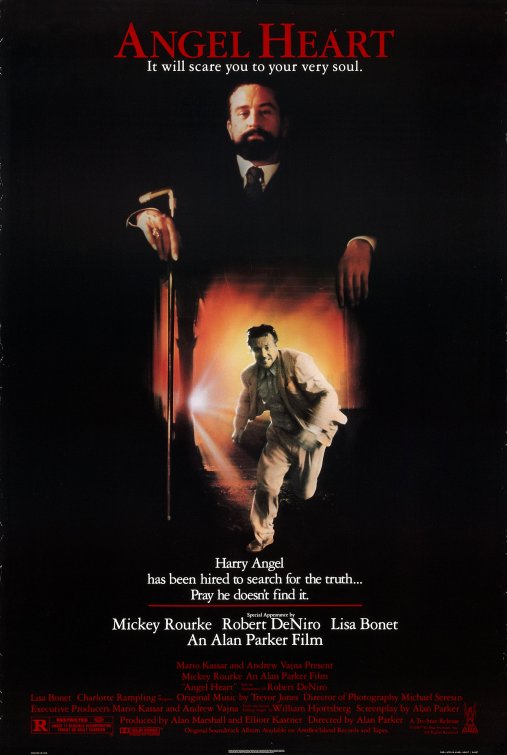
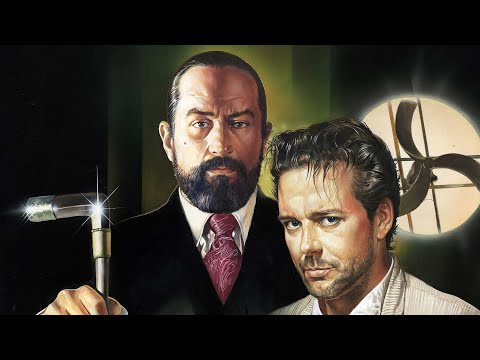
Mickey Rourke plays Harry Angel, a small-time private investigator hired by a mysterious, long-nailed client named Louis Cyphre — played by Robert De Niro with quiet, unsettling relish — to track down a singer who vanished years earlier. Director Alan Parker builds the case like a standard missing-persons noir at first, all rain-soaked New York and dead-end interviews, before letting something considerably stranger seep in at the edges.
The trail leads Harry down to steamy 1950s New Orleans, into voodoo ritual and a string of increasingly gruesome deaths connected to everyone he questions, with Lisa Bonet turning heads as a young woman entangled in it all. Parker commits fully to the occult atmosphere rather than treating it as garnish, and the film's dread builds less from jump scares than from Harry's dawning, horrified recognition of what he's actually investigating.
By the time the answer arrives, you'll wish you hadn't asked the question.
Angel Heart earns its reputation as a genre hybrid that actually works — the noir mechanics and the supernatural horror aren't fighting each other, they're the same story told two ways at once. It's stylish, sweaty, and genuinely disturbing by the end, and it holds up as one of the more distinctive detective films of its decade.
Angel Heart came together when director Alan Parker adapted William Hjortsberg's novel Falling Angel, securing financing through Carolco Pictures after courting backers Mario Kassar and Andrew Vajna in Rome. Before settling on Mickey Rourke as down-and-out gumshoe Harry Angel, Parker had floated the role to Al Pacino and Jack Nicholson, while Robert De Niro was instead drawn to the smaller, stranger part of the sharp-dressed Louis Cyphre. Casting Lisa Bonet, then known for the wholesome Cosby Show, opposite Rourke in the film's explicit occult sex scene caused a stir on its own. The film's original cut was hit with an X rating over that sequence, forcing last-minute trims before its 1987 theatrical run.
On release, Angel Heart landed the same weekend as Lethal Weapon and got buried at the box office, taking in only about as much as its budget. Critics were split at the time, but the film built a devoted following on home video, where its woozy blend of noir detective plotting and supernatural horror found the audience it had missed in theaters. It's now regarded as one of Alan Parker's most stylistically daring films and a high point for Mickey Rourke, who plays Harry Angel with a haggard, sweat-soaked intensity that anchors the film's slide from mystery into nightmare. For fans of slow-burn occult noir with a real sense of dread, it has aged into a genuine cult touchstone.