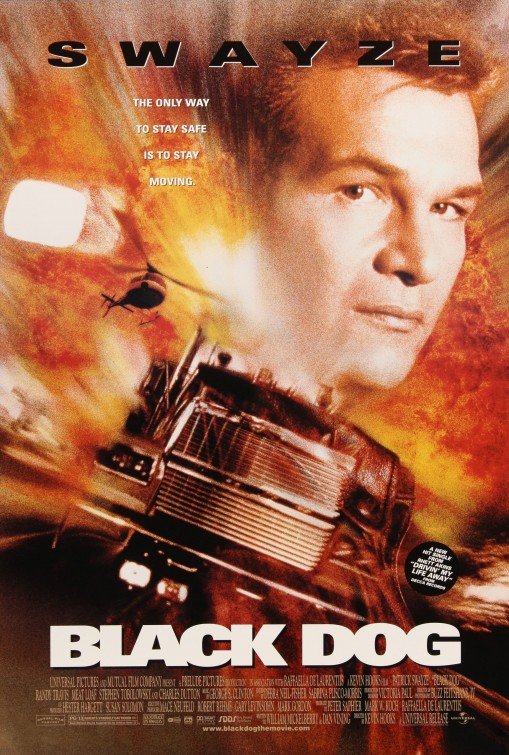
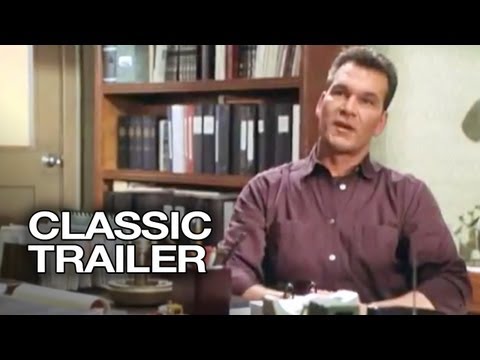
Black Dog earns its keep as pure, unpretentious action filmmaking, the kind of movie built to deliver exactly what it promises: big rigs, bigger crashes, and a hero worth rooting for. Patrick Swayze plays it straight as a paroled driver pulled into a job that turns into a nightmare, and that sincerity is the engine that keeps things moving even when the plot takes familiar turns. Critics were unimpressed on release, but audiences responded far more warmly, and it is easy to see why: the film never pretends to be more than a hard-charging thrill ride, and on that narrow promise it consistently delivers. If you want a movie that trusts real trucks over computer effects, this one earns your evening.
What makes Black Dog work is the cast leaning fully into the pulp of it. Swayze grounds the movie with the same physical, likable commitment he brought to his best action roles, never winking at the material even when it gets broad. Meat Loaf, playing against the good guys, brings a genuine sense of menace and unpredictability that gives the back half real teeth, and Randy Travis rounds out the crew with an easy, lived-in presence that sells the trucking-world setting. The supporting cast of federal agents and hangers-on keeps the pressure building without slowing the momentum down. None of it is subtle, but the chemistry and commitment on screen are exactly why the film has outlasted its rough reviews.
Real trucks, real crashes, real Swayze: Black Dog delivers dumb fun with genuine horsepower.
Black Dog is not for anyone hoping for prestige drama or a tightly reasoned thriller; it is for viewers who miss the specific pleasure of practical stunt work and blue-collar action heroes. Fans of nineties road-and-chase movies, Swayze completists, and anyone nostalgic for a decade when studios still let stunt teams total real vehicles for the camera will get exactly what they came for. Go in expecting a lean, hard-driving genre picture rather than a classic, and it becomes a genuinely satisfying watch, especially with a group and low expectations for anything beyond big engines and bigger stunts. It has earned its cult following honestly, one truck flip at a time, and that is a recommendation worth trusting over a cold critical score.
Black Dog has an unusually well-documented path to the screen. The project was originally developed as a vehicle for Kevin Sorbo during a hiatus from Hercules: The Legendary Journeys, with Sorbo pitching it as a mix of Die Hard and Speed set on the highway. By late 1997, Patrick Swayze had stepped into the lead role instead, bringing his established action-movie credibility to the part of a paroled driver pulled back into danger. Behind the camera was Kevin Hooks, a director already known for the similarly kinetic Passenger 57. Universal Pictures released the finished film in theaters on May 1, 1998, positioning it as a counter-programming action option in a crowded early-summer season.
Decades on, Black Dog occupies a specific and affectionate corner of nineties action nostalgia. Critics dismissed it on arrival, but audience scores have always told a warmer story, and the film has since picked up a following among car-culture and stunt-driving enthusiasts who prize its commitment to practical, real-vehicle action over digital effects. It sits comfortably alongside other blue-collar-hero action pictures of its era, the kind that put a regular working man behind the wheel instead of a super-spy. For viewers drawn to that specific lane of genre filmmaking, or curious about a slice of Swayze's career outside his best-known dramas, Black Dog rewards a rewatch far more than its critical reputation would suggest, especially for anyone who appreciates a stunt team's real handiwork on screen.