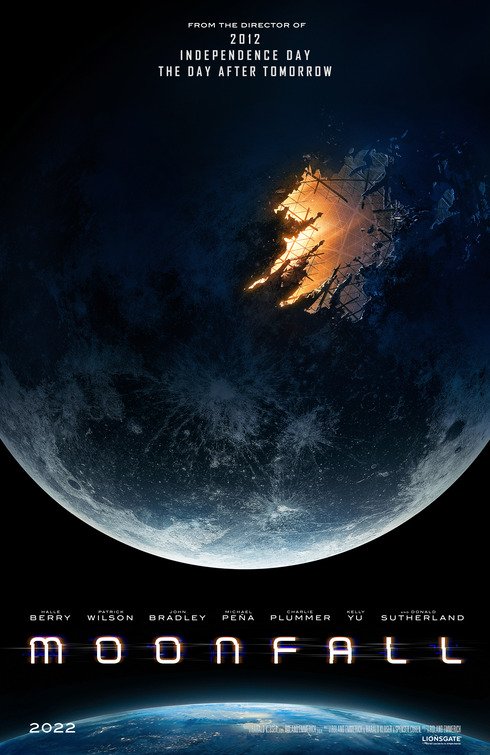
Moonfall is disaster-movie comfort food, and it knows exactly what it is. Roland Emmerich has spent three decades blowing up landmarks and outrunning natural (and unnatural) catastrophes, and here he swaps hurricanes and aliens for something bigger: the Moon itself, turned into a wrecking ball. The premise is gloriously unhinged, and the film never apologizes for it. If you came expecting hard science, you're in the wrong theater; if you came for collapsing skylines, gravity going haywire, and a NASA conspiracy that escalates by the minute, you're exactly where you should be. This is a movie built for a big screen, a bowl of popcorn, and zero expectations of restraint.
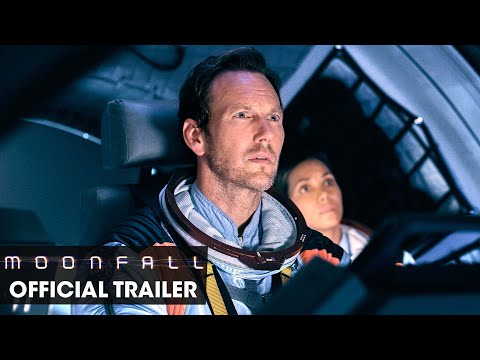
What keeps it watchable past the spectacle is the cast committing fully to material that could have curdled into self-parody. Halle Berry and Patrick Wilson play it straight as two astronauts nobody believes, and John Bradley steals scenes as the conspiracy theorist who turns out to be right about everything, giving the film its most enjoyable throughline. The effects team earns their paycheck too: the sequences of the Moon looming impossibly large over Earth, warping tides and gravity as it approaches, have a genuine sense of scale that a lot of bigger-budgeted spectacle fails to deliver. It's dumb, but it's expensively, sincerely dumb.
The Moon is coming for us, and it has never looked better falling apart.
Recommend this to the friend who still watches Independence Day every Fourth of July, or anyone who has ever wanted to see the Moon get demolished in slow motion. It won't convert skeptics of the disaster genre, and the plot's late-film reveals ask you to swallow some genuinely wild ideas about what the Moon actually is. But taken on its own terms, as a loud, earnest, effects-driven ride, Moonfall delivers exactly the kind of scale and commitment that made Emmerich's earlier hits so much fun in the first place. Go in for the spectacle, not the science, and you'll have a good time.
Moonfall reunited Roland Emmerich with the disaster-movie formula he helped popularize with Independence Day and 2012, this time centering the destruction on the Moon itself rather than aliens or natural disasters. The $150 million production was an international co-production spanning the US, UK, China, and Canada, and it built more than a hundred physical sets across six soundstages to keep as much of the spectacle practical as possible. Stanley Tucci was originally attached to a lead role before COVID-19 travel restrictions forced a recast, with Michael Peña stepping in. The film leaned heavily on visual effects, requiring roughly 1,700 shots split across four different effects studios to realize its planet-scale destruction sequences.
Critical reception was largely unkind, with reviewers landing around 35% on Rotten Tomatoes and a similarly middling Metacritic score, and the film underperformed at the box office against its budget. But its reputation has softened somewhat since release into so-bad-it's-good cult territory, helped along by moments like astrophysicist Neil deGrasse Tyson publicly ranking it among the most scientifically inaccurate sci-fi films he'd ever seen, calling out its handling of basic physics. That kind of infamy has arguably done the film more favors than a mixed critical run alone would have, turning it into a go-to pick for viewers looking for big, gleefully absurd spectacle rather than scientific rigor.