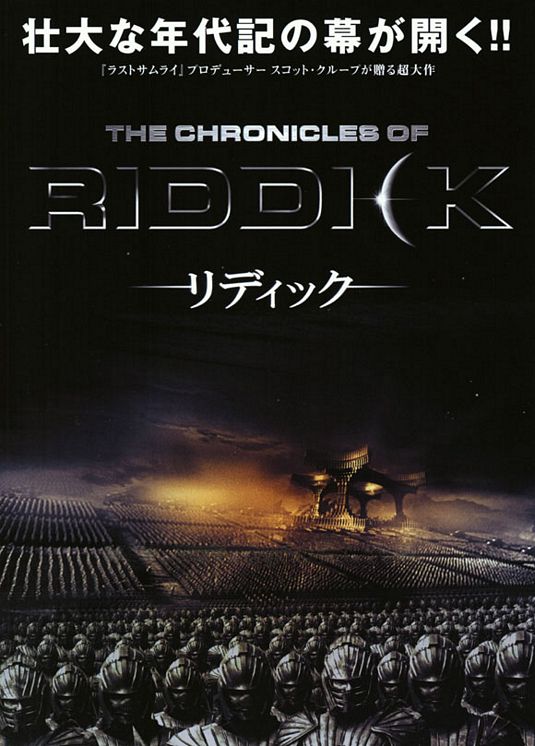

The Chronicles of Riddick makes a strange choice for a sequel: it takes Pitch Black, a tight B-movie horror-thriller set almost entirely in the dark, and blows it out into a full space opera with warlord dynasties, elemental priestesses, and a religious army called the Necromongers converting planets by the sword. David Twohy commits to the swing, building an entire mythology of Furyans, Elementals, and UnderVerses that owes more to Dune and Star Wars than to the creature-feature original.
Vin Diesel plays Riddick with the same flat, predatory stillness that made Pitch Black work, and the film wisely keeps him an outsider even as the plot promotes him to chosen-one status. Karl Urban's Vaako gives the Necromonger side a real power struggle instead of a faceless villain army, and Judi Dench, cast against every expectation as the ethereal Elemental Aereon, brings a gravity to the exposition-heavy mythology that a lesser actor couldn't have sold.
A stranded-survivors thriller blown up into a Diesel-led space opera, for better and for worse.
Diesel wanted Judi Dench specifically for Aereon and reportedly filled her dressing room with flowers, telling the production they couldn't start casting the role until she agreed. He was paid a reported $11 million for the role and co-produced through his own company, One Race Films, a sign of how much personal capital he'd staked on turning Riddick into a franchise.
Critics were unkind on release, with the film settling around 29% on Rotten Tomatoes, and the consensus complaint was consistent: as a sequel to a scrappy horror-thriller, the jump to full-blown mythology-building space opera felt bloated. It grossed roughly $116 million worldwide against a production budget north of $100 million. Its reputation has softened since, mostly among genre fans drawn to its go-for-broke world-building and Dench's odd, committed casting.
The Chronicles of Riddick also spawned one of the best-reviewed movie tie-in games ever made. The Chronicles of Riddick: Escape from Butcher Bay, released the same year, cast Vin Diesel as Riddick again and told a prison-break story set before both films' events; critics routinely called the game better than the movie itself, a rarity for licensed tie-ins, and it went on to win the Golden Joystick Award for Unsung Hero of the Year and the Spike Video Game Award for Best Game Based on a Movie. It's a strange footnote for a film that struggled with critics and at the box office — the character's most acclaimed outing that year wasn't even on a movie screen.