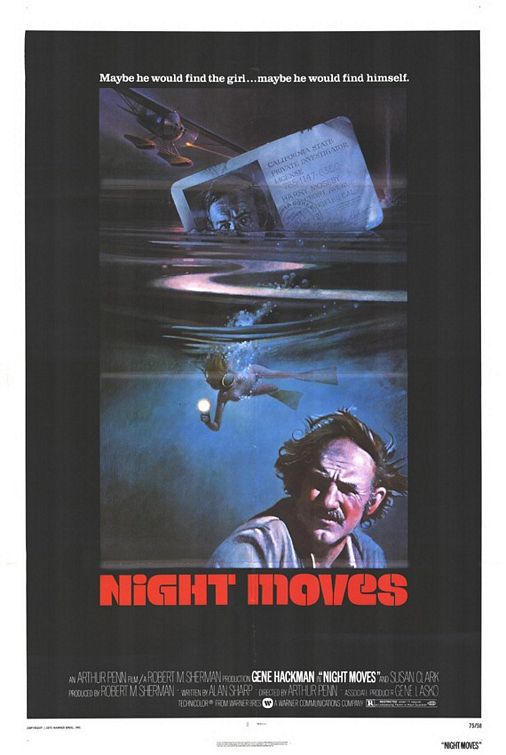
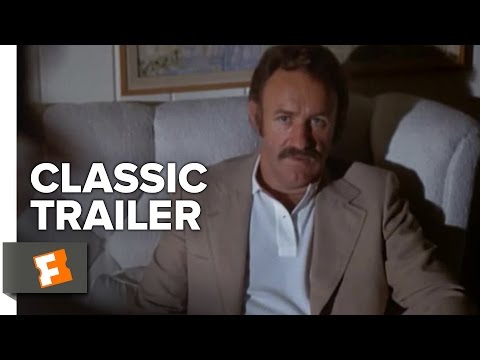
Night Moves is one of the great, underseen products of 1970s American cinema, a private-eye story that deliberately withholds the satisfaction of a clean solution. Arthur Penn builds a mood of drifting, low-grade dread rather than conventional suspense, and Gene Hackman's performance as a directionless investigator quietly unraveling his own life is one of the finest of his career. This isn't a puzzle-box mystery so much as a character study wearing a detective plot's clothing, and it rewards patience with an ending that's genuinely unsettling rather than tidy. It's a film that trusts silence and ambiguity as much as incident.
What makes it linger is how thoroughly it strips away the private eye's usual competence and control. Hackman's Harry Moseby is smart but consistently outmaneuvered, blindsided by people closer to him than any stranger, and the film treats that helplessness as the whole point rather than a twist to be resolved. The supporting cast, including a young Melanie Griffith and Jennifer Warren, adds to the sense of a world where everyone is compromised in some way. It's a bleaker, more morally exhausted cousin to the decade's other paranoid thrillers, and it earns that bleakness honestly.
A detective story that refuses to solve itself neatly, and is better for it.
Recommend this to anyone serious about American cinema of the era, especially fans of Chinatown or The Long Goodbye looking for another entry in that same vein of disillusioned detective stories. It's slower and more oblique than a modern thriller audience might expect, but that patience is exactly what makes the final stretch land so hard. This is essential viewing for Gene Hackman completists and for anyone who wants to understand how thoroughly 1970s Hollywood was willing to deny its characters, and its audience, easy answers.
Night Moves was directed by Arthur Penn, fresh off Bonnie and Clyde and Little Big Man, and it arrived as part of a wave of 1970s films reinterpreting the classic private-eye genre through a more paranoid, morally uncertain lens. The role that went to Jennifer Warren was reportedly once considered for Faye Dunaway, who instead chose to make Chinatown, a film Night Moves is frequently compared to. Its release was delayed roughly two years after filming wrapped in 1973, and the film's original title, Dark Tower, was changed before release to avoid confusion with the same era's disaster blockbuster The Towering Inferno. Warner Bros. eventually released it in 1975 to respectful but muted attention.
Compared to Arthur Penn's more famous work, Night Moves is quieter and colder, less interested in myth-making than in dissecting a man who can't see what's happening around him until it's too late. It has grown in critical estimation over the decades, now frequently cited by film historians as one of the most emotionally clear-eyed entries in the 1970s neo-noir revival. It's an especially good fit for viewers who prize character and atmosphere over plot mechanics, since the mystery itself is almost secondary to what it reveals about the people involved. Anyone building out a proper Gene Hackman marathon should treat this as a non-negotiable stop.