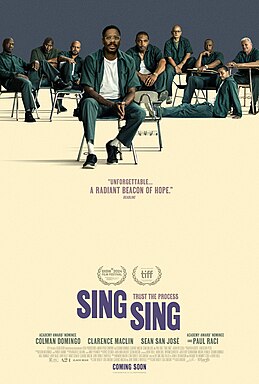
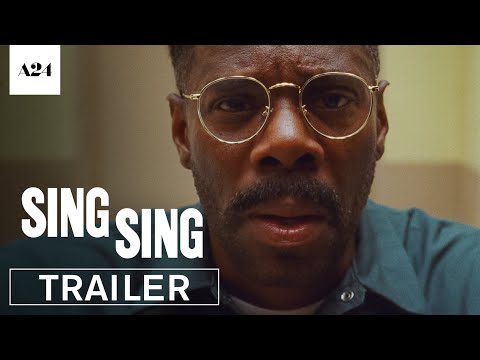
The decision to cast RTA's actual alumni instead of professional actors could have played as a gimmick, but it doesn't, because the film builds its scenes around what these men can actually do rather than asking them to perform someone else's idea of prison life. Clarence Maclin, playing a hardened version of himself who slowly opens up to the theater group, gives one of the more unguarded performances of the year without a trace of self-consciousness about being on camera.
Colman Domingo carries the film's emotional architecture as Divine G, a man whose faith in the program is tested by a parole system that doesn't much care about rehabilitation, and he plays the character's hope as something hard-won rather than default optimism. Paul Raci, as the volunteer director staging the group's original play, gives the film its lightest scenes without undercutting the stakes underneath them.
A prison movie that trusts the men who actually lived it to tell you what rehabilitation looks like.
It would have been easy to turn this into an uplift machine that smooths over what incarceration actually costs these men, and the film mostly resists that pull, letting scenes of genuine joy sit right next to reminders of how little control anyone here has over their own release date. A prison drama built on real testimony rather than a familiar redemption template, and better for it.
Director Greg Kwedar and co-writer Clint Bentley developed the script in close collaboration with RTA and its alumni, several of whom receive story credit alongside the professional screenwriters. The film was shot on a modest independent budget with Black Bear Pictures and Marfa Peach Company producing, and much of the cast beyond Domingo, Raci, and San José consists of RTA graduates playing characters based on, or named after, themselves. A24 picked up distribution ahead of its 2024 theatrical release.
Sing Sing received some of the strongest reviews of its year, with particular praise for Domingo's and Maclin's performances, and it went on to earn multiple Academy Award nominations including Best Actor for Domingo and Best Adapted Screenplay. The filmmakers arranged screenings inside correctional facilities as part of the release, tying the film's distribution directly back to the real RTA program it depicts — an unusually direct link between a movie's subject and its own rollout.
Sing Sing's production model matched its subject matter in a way few films manage: everyone on set, from the director down to production assistants, was paid the same day rate and given an equity stake in the finished film, more than 80 individual profit-sharing agreements in total. The financial structure was rewritten so that 40% of revenue flows to that cast-and-crew pool before investors see a dollar back, with the split moving to an even 50/50 once investors hit 120% recoupment. It's an unusually literal expression of the film's own theme, that everyone in the room deserves ownership over the work, and Domingo has spoken about hoping the model spreads to other independent productions rather than remaining a one-off curiosity.