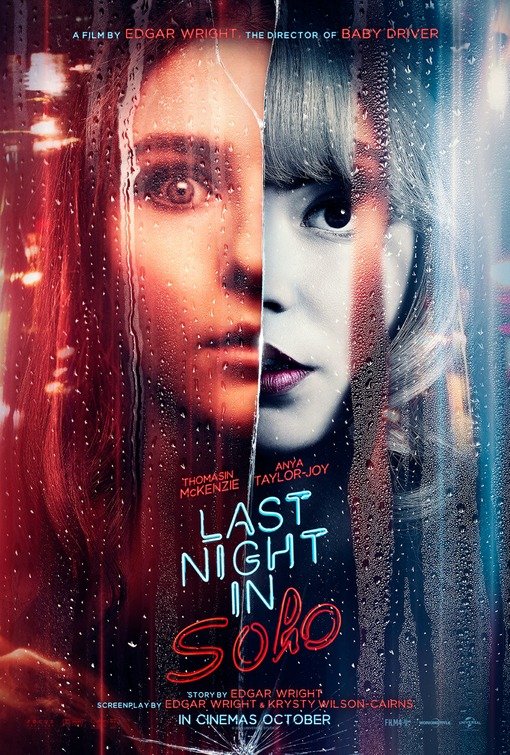
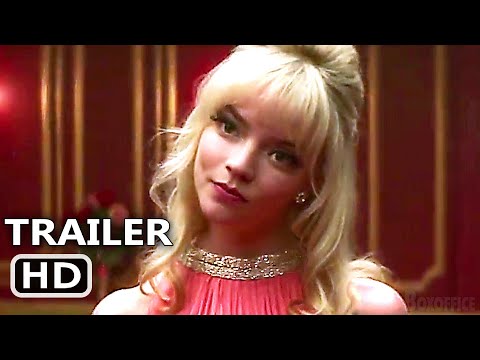
Thomasin McKenzie plays Eloise, a fashion student who moves to London and starts slipping back through her dreams into 1960s Soho, where she inhabits the life of an aspiring singer played by Anya Taylor-Joy. Director Edgar Wright, better known for kinetic comedies like Shaun of the Dead and Baby Driver, slows down and darkens his palette here, though his visual flair is unmistakably still present.
What starts as a glossy, neon-soaked fantasy about a supposedly golden era curdles fast, as Sandie's story reveals the exploitation underneath the glamour, and the line between Eloise's dreams and her waking life starts to blur dangerously. Matt Smith is genuinely unsettling as the man orbiting Sandie's rise, and Diana Rigg, in one of her final roles, adds real weight to the present-day scenes.
Sixties London looks gorgeous right up until you see what's underneath it.
Last Night in Soho is Edgar Wright working in a different, more unsettling register, and the ambition mostly pays off even if the back half doesn't fully stick every landing. The style and the two central performances carry it through, and the film's point about nostalgia hiding real damage lands harder than a lot of prettier period pieces manage.
Last Night in Soho was a long-gestating passion project for Edgar Wright, who co-wrote the screenplay with 1917 writer Krysty Wilson-Cairns and set out to make his first outright horror film after years of genre-blending comedies. The production assembled a cast spanning generations, pairing rising stars Thomasin McKenzie and Anya Taylor-Joy with veteran British actors Terence Stamp, Rita Tushingham, and the late Diana Rigg. Wright shot extensively on location in Soho itself, threading the neighborhood's real streets, clubs, and landmarks into the film's dual timelines. The film premiered at the Venice International Film Festival in 2021 before its theatrical release that October, arriving amid a wave of anticipation for Wright's take on psychological horror.
Coming right after the kinetic crime-comedy of Baby Driver, Last Night in Soho marked a deliberate tonal swerve for Wright, trading needle-drop heists for giallo-inspired dread, neon-lit dream sequences, and a slower, more melancholic rhythm reminiscent of Nicolas Roeg or Dario Argento. Reception was mixed on release, with praise for its atmosphere, production design, and lead performances outweighing criticism of its final-act turns, but the film has since gathered a devoted following, particularly among fans drawn to its 1960s soundtrack and its meditation on nostalgia's darker edges. For anyone who loves genre films that treat their setting as a character, Soho's fog-lit streets make the city itself one of the film's most memorable presences.