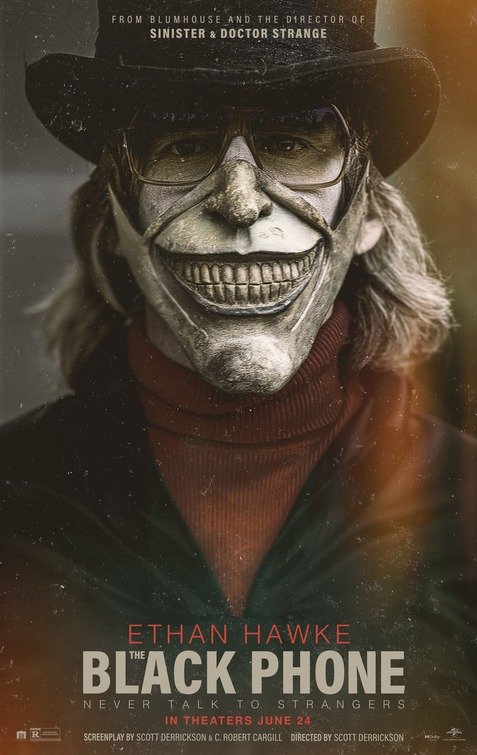

The Black Phone works because it never treats its premise as a gimmick. Scott Derrickson grounds the supernatural elements — a dead phone that rings anyway — in a spare, grimy 1970s reality, and lets the horror build through atmosphere and dread rather than jump-scare mechanics alone. Ethan Hawke, mostly hidden behind a series of unnerving masks, gives a performance that's all coiled menace and unnerving stillness, never tipping into camp, while newcomer Mason Thames anchors the film with a lead performance well beyond what you'd expect from a first-time actor. It's a film that respects its audience enough to let tension simmer.
What elevates it further is Madeleine McGraw as the protagonist's younger sister, whose subplot injects both warmth and forward momentum into a story that could otherwise feel claustrophobic. Derrickson, working again with his Sinister-era instincts for slow-burn dread, balances the film's horror-thriller mechanics with real emotional stakes around family, trauma, and resilience. The period setting is used purposefully rather than decoratively, stripping away modern conveniences like cell phones so the isolation of the central premise actually holds up. It's a tightly constructed genre film that trusts its craft over shock value.
A horror film that earns its scares by making you care who survives them.
This is an easy, confident recommendation for horror fans who want real scares attached to real characters rather than disposable ones. It's not the goriest or most extreme entry in the genre, but it's smart, well-cast, and keeps its grip on you in a way that lingers well after the credits roll. Go in expecting a slow-build thriller with a strong emotional core rather than nonstop jump scares, and what you get is what modern horror too often skips: a story worth caring about, carried by a cast that clearly understood the assignment, and a director with a real feel for how long to let that phone stay silent before it rings again.
The Black Phone reunites director Scott Derrickson with Ethan Hawke and screenwriter C. Robert Cargill, the same team behind Sinister, and adapts a 2004 short story by Joe Hill from his collection 20th Century Ghosts. The production drew significant attention for its casting process, ultimately building the film around first-time actor Mason Thames after an extensive search, alongside Madeleine McGraw as his younger sister. Practical effects played a major role in the film's identity: makeup artist Tom Savini's studio created roughly thirty distinct masks for Hawke's villain, the Grabber, drawing on inspiration from ancient theatrical and circus masks rather than typical slasher iconography.
The film arrived as one of the strongest-reviewed horror releases of its year and quickly built a devoted following, enough to spawn a sequel a few years later — a rare outcome for an original horror property not based on an existing extended universe. It sits comfortably alongside Sinister and Doctor Strange in Derrickson's filmography as proof he's most at home blending atmosphere-first scares with strong character work. It resonates especially with viewers who came of age on 1980s-set horror and coming-of-age thrillers, and with skeptics who doubt an effective horror movie needs a franchise name attached to hit hard.