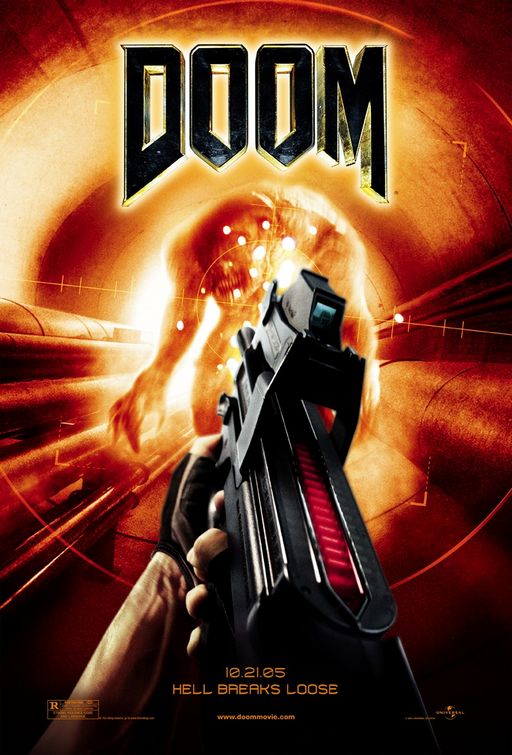

A squad of Marines gets sent to a research facility on Mars after contact goes dark, and finds the place overrun with something that used to be the science staff. Director Andrzej Bartkowiak adapts the video game about as literally as a movie possibly can — dim corridors, snarling mutants, a squad that thins out room by room — and Karl Urban anchors the whole thing as the one soldier actually thinking instead of just shooting.
Dwayne Johnson gets one of his more interesting early roles as the squad leader whose loyalties bend under pressure, while Rosamund Pike's scientist supplies just enough exposition to keep the mutation plot from collapsing into pure noise. The much-discussed first-person shooter sequence is a genuine curiosity — gimmicky, sure, but it is the rare game adaptation that seems to actually understand what its own fans showed up hoping to see on screen.
It knows exactly what game it's based on, and it never once tries to be something classier.
A 3.7 and 64% lands about right: this never transcends its source material, but it also never pretends to be anything more than a competent, gross, well-cast creature-feature version of the game it is named after. If you already know exactly what you are pressing play on before it starts, Doom delivers precisely that, without much wasted motion along the way.
Doom adapts id Software's landmark 1993 video game, one of the titles credited with popularizing the first-person shooter genre, and its journey to the screen took years of stalled attempts before director Andrzej Bartkowiak finally brought it to theaters. The production was an international effort, shot largely in the Czech Republic with additional work in Germany, and it leaned on a mix of practical creature effects and computer-generated imagery to bring the game's mutated monsters to life. Its most talked-about stretch of footage is a lengthy sequence filmed entirely from a first-person perspective, an overt homage to the gameplay that inspired it. Critics were largely unimpressed on release, and the film underperformed at the box office.
Among fans of video-game movies, Doom is remembered less for its plot than for that first-person shooter sequence, still cited as one of the more inventive attempts to translate interactive gameplay into cinema. It also stands out as an early lead role for Dwayne Johnson, cast against type as a hardened, morally compromised marine years before he became known almost exclusively for heroic action parts. Viewed today, it works best as a curiosity piece for gamers who grew up with the original Doom, or for action fans who want to see The Rock in one of his rare villain-adjacent roles.
Doom leaned hard into deep-cut fan service in places most critics wouldn't have caught. When Sarge picks up the game's signature superweapon, a computer readout identifies it onscreen as the 'Bio Force Gun version 3.14' — a nod to id Software lore where 314 doubles as both a reference to Commander Keen's canonical IQ and, not coincidentally, the first three digits of pi. That level of in-joke suggests real buy-in from id Software, which reportedly consulted on the creature and weapon designs and signed off on the script to keep things recognizable to players. None of that goodwill translated into a wider audience, though: Doom landed at just 19% on Rotten Tomatoes and made only around $56 million worldwide against a $60 million budget, a quiet failure that helped keep major studios away from big-budget Doom adaptations for the better part of two decades.