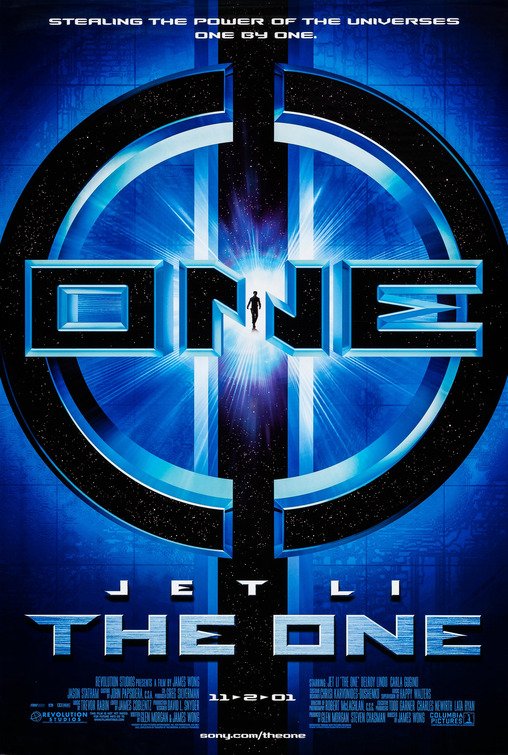
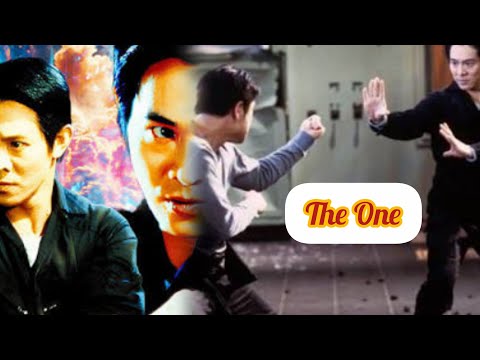
Jet Li plays a rogue agent hunting down alternate versions of himself across parallel universes, absorbing each one's power the moment he kills them — which means nearly every fight in The One is Jet Li versus Jet Li, filmed with doubled choreography that was still a genuine novelty back in 2001. Director James Wong keeps the multiverse mechanics simple enough that they never once get in the way of the action set pieces.
Delroy Lindo and Jason Statham, early in his American career, provide the law-enforcement side chasing both versions of Li's character across dimensions, while Carla Gugino grounds the human stakes as the wife caught between two men who look identical and very much are not. The fight choreography is the reason to watch this one — Li fighting himself is a gimmick the film fully understands and exploits about as well as it possibly could.
Jet Li versus Jet Li is exactly as good an idea as it sounds.
A 3.9 and 68% is a strong showing for what is ultimately a lean, high-concept action movie rather than prestige science fiction, and it earns that score by never once overstaying its welcome across a tight 87 minutes. This is B-movie sci-fi action done with real craft and confidence, not an apology for what it is.
The One went through an unusually public casting shuffle before it became a Jet Li vehicle: the project was first developed with Dwayne Johnson attached, and for a time carried the working title The Rock Movie, before Johnson departed to star in The Mummy Returns. Jackie Chan was also considered but passed, citing his refusal to play villainous characters, which opened the door for Jet Li to take on dual roles as hero and antagonist. Directed by James Wong and written with his frequent collaborator Glen Morgan, the film built its multiverse premise around Li's ability to distinguish his two characters physically, giving each a different real-world martial arts discipline rather than relying purely on costume or makeup changes.
For longtime fans of Jet Li, The One is notable as one of his higher-profile English-language star vehicles from the early 2000s, following his breakout Hollywood roles in Lethal Weapon 4 and Romeo Must Die. Its multiverse-hopping premise, which lets a single actor face off against himself using two contrasting fighting styles, anticipated a concept that later multiverse action and superhero films would explore on a much larger scale. It is not considered one of Li's most acclaimed films critically, but it remains a solid pick for viewers who want straightforward, well-choreographed martial arts action wrapped in a high-concept sci-fi premise.
Whatever critics made of it, The One held its own at the box office. It opened in second place in North America behind Monsters, Inc., pulling in a $19.1 million weekend, and went on to gross roughly $79.6 million worldwide against a reported $49 million budget — a solid outcome for Revolution Studios. It was personally lucrative for Jet Li too: he reportedly negotiated a $9.5 million salary plus backend points on the film's gross, an unusually rich deal for an actor still establishing himself in English-language leads. That commercial showing helped cement Li's viability as a Hollywood action star, clearing the way for the run of US vehicles and international co-productions that followed later in the decade.