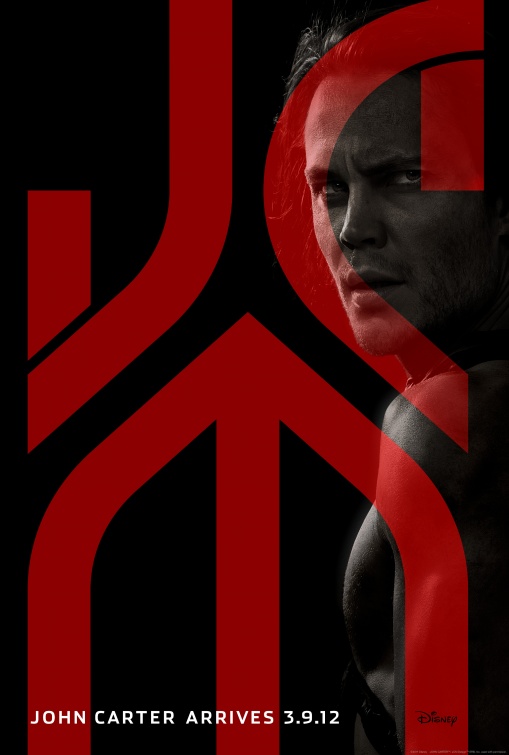
John Carter takes source material older than the concept of the sci-fi blockbuster — Edgar Rice Burroughs' 1912 Barsoom stories predate Star Wars by six decades — and treats it with real formal ambition instead of nostalgia. Andrew Stanton, making his live-action debut after Finding Nemo and WALL-E, builds Mars as an alien ecosystem of four-armed Tharks, flying warships, and color-coded city-states, and he stages the planet's lower gravity as an actual storytelling device rather than a visual gimmick.
Taylor Kitsch carries the role with a weary, physical performance that leans into Carter's exhaustion rather than swagger, which suits a man who's already lost one war before the plot even starts. Lynn Collins matches him as Dejah Thoris, playing a scientist-princess with actual expertise instead of the usual damsel dressing. Stanton's Pixar instincts show in the alien Tharks, particularly Willem Dafoe's motion-captured Tars Tarkas.
Century-old pulp turned into an ambitious blockbuster, buried by a marketing campaign that forgot to mention Mars.
Stanton had read Burroughs' novels as a kid and had reportedly pictured entire sequences from A Princess of Mars for years before Disney handed him the job, and he and his team visited the Edgar Rice Burroughs company archives in Tarzana to dig through original manuscripts before writing a page. Disney's marketing famously dropped 'of Mars' and any reference to the source novels from the title and trailers, leaving general audiences with little idea what kind of movie they were even being sold.
John Carter landed at a mediocre 51-52% on Rotten Tomatoes, but the real story was financial: a reported production budget north of $250 million, ballooned further by marketing, meant even a $284 million worldwide gross turned it into one of the largest write-downs in studio history. That reputation as a flop has aged worse than the film itself — John Carter has built a devoted cult following among viewers who found a sincere pulp adventure buried under a botched marketing campaign.
John Carter's soundtrack is its own quiet triumph inside the wreckage. Stanton broke with his usual Pixar collaborator Thomas Newman, who'd scored both Finding Nemo and WALL-E for him, and brought in Michael Giacchino instead for what remains their only collaboration; the result is one of Giacchino's most purely orchestral scores, and critics singled it out as a highlight even in reviews that were lukewarm on everything else. The screenplay had an unusual pedigree of its own, co-written with Pulitzer Prize-winning novelist Michael Chabon, brought in to help ground Burroughs' pulp in something closer to real emotional stakes. And the box-office math explains the 'disaster' reputation better than any review did: analysts calculated the film needed to gross more than $600 million worldwide just to break even, a bar only a few dozen films in studio history have ever cleared. The fallout ended any hope of adapting Burroughs' other ten Barsoom novels, a planned franchise Disney quietly shelved, leaving the devoted fanbase this film built with nowhere to go but repeat viewings and a lingering wish that somebody, someday, picks the saga back up.