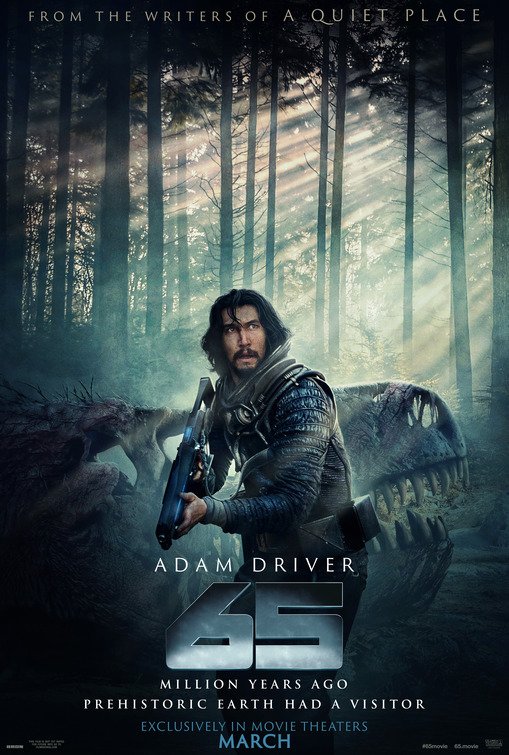
Scott Beck and Bryan Woods, who wrote A Quiet Place, strip their premise down to something almost absurdly simple: a pilot named Mills crash-lands on an unknown planet, discovers he's actually stranded on Earth 65 million years in his own past, and has to cross hostile prehistoric terrain with the only other survivor, a young girl who doesn't speak his language. There's barely any dialogue for long stretches, and almost no worldbuilding beyond getting to the escape pod before the dinosaurs or the incoming extinction event get there first. It's a B-movie hook, Adam Driver versus dinosaurs, played with more sincerity than irony.
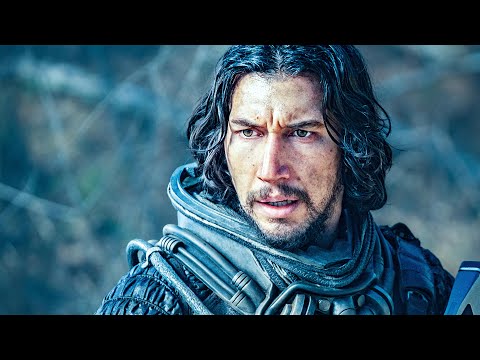
Driver plays Mills as quietly grieving rather than heroic, carrying a dead daughter's memory into a surrogate-parent dynamic with Ariana Greenblatt's Koa that the film wisely never over-explains through dialogue. Because the two leads share no common language for most of the runtime, Beck and Woods lean on physical performance and editing rhythm to build trust between them, and Greenblatt in particular holds her own against a far more experienced co-star. The creature encounters are staged for tension rather than spectacle — long stretches of near-silence broken by sudden, close-quarters attacks — closer in spirit to a survival thriller than a monster-movie showcase.
Adam Driver against sixty-five million years of bad timing, one dinosaur at a time.
The production shot largely on location in and around Kisatchie National Forest in Louisiana, using the terrain's mix of hills and dense woodland to stand in for a pre-extinction Earth, with additional beach work done on the Oregon coast. Sam Raimi produced through his Raimi Productions banner, and the creature roster leans on real if lesser-known Cretaceous fauna rather than just recycled tyrannosaurs — Nothosaurus and the massive rauisuchian Fasolasuchus both appear, giving anyone paying attention something more specific to spot than generic movie-dinosaur design, and a reminder the prehistoric world had more range than the genre usually bothers to show.
Reviews were mixed at best, with Rotten Tomatoes settling in the mid-30s and Metacritic around 40, critics generally faulting the thin script even where they credited Driver's commitment. It's a smaller, stranger film than its marketing suggested — sold as a dinosaur action movie, playing closer to a quiet two-hander about loss — and that mismatch likely cost it some goodwill on release. Seen on its own terms, as a lean survival story stripped of franchise ambition, it holds up better than its scorecard suggests, especially in its quieter, more grief-driven stretches.
65 also underperformed badly enough at the box office to become a small case study in mismatched marketing, pulling in a reported $60 million worldwide against a budget in the $45 million range once prints and advertising are factored in — a shortfall for a wide theatrical release built around Adam Driver and dinosaurs. It found a second life once it hit streaming, drawing far larger audiences on platforms like Hulu than its opening-weekend numbers suggested, which tracks for a film that plays better at home, at its own patient pace, than as a loud multiplex event competing for a big-screen crowd.