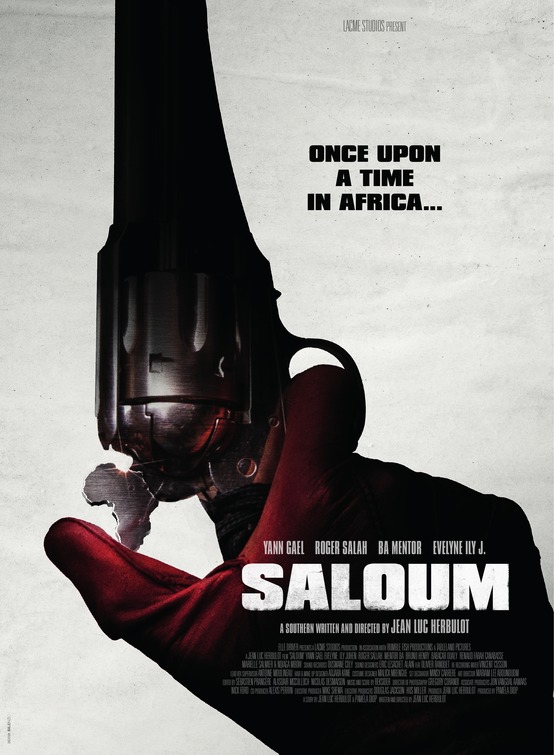
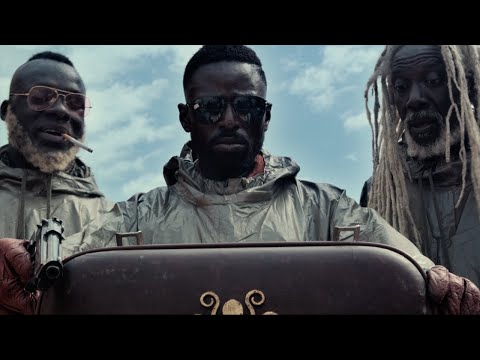
Three mercenaries known as Bangui's Hyenas, played by Yann Gael, Roger Sallah, and Mentor Ba, are smuggling gold and a hostage out of a coup in Guinea-Bissau when engine trouble strands them in Senegal's Sine-Saloum Delta. They lie low at a remote eco-lodge, and Jean Luc Herbulot's film spends its first act as a lean, confident crime thriller about three professionals trying not to blow their cover among strangers who ask too many questions.
Then it swerves, hard, into folklore and body horror, and the shift is the whole point rather than a bait-and-switch. Herbulot moves between genres with real visual confidence, treating the delta's flat horizons and golden light like a Sergio Leone frame before pulling the rug out from under that comfort. The three leads have the loose, lived-in chemistry of people who've actually watched each other's backs before, which makes the back half land that much harder.
It starts as a heist movie and ends as something you haven't seen before
At 84 minutes it never overstays its welcome, and it's genuinely doing something few horror or crime films attempt, blending West African mythology with a heist-gone-wrong structure without softening either half. 4.0 ears and 71% worth your time is earned by how confidently it commits to its own strangeness, unlike most things you'll find on this list.
Saloum was written and directed by Congolese filmmaker Jean Luc Herbulot and produced with Pamela Diop through her newly founded pan-African production company, Lacmé Studios. The film had its international premiere in the Midnight Madness section of the Toronto International Film Festival in September 2021, a program known for launching genre films to global attention. Herbulot has spoken about deliberately mixing the visual languages of spaghetti Westerns and samurai films with West African folklore and setting, rather than following a single genre template. Reviews were notably strong, with the film picking up an unusually high approval rating from critics on aggregator sites.
Saloum arrived as part of a broader push for African genre filmmaking to reach international festival and streaming audiences beyond arthouse dramas, and it's frequently cited as a milestone for that wave alongside Lacmé Studios' broader mission. Its willingness to blend crime-thriller, war-movie, and supernatural-horror elements within a specifically Senegalese setting sets it apart from more genre-conventional horror imports. It's a strong pick for viewers who enjoy globally minded genre cinema and want horror that doesn't default to American or European settings and iconography, while still delivering pulpy, fast-paced entertainment.
Saloum's festival run kept building after Toronto: Herbulot won the Best Director prize in Fantastic Fest's Next Wave section, and the film picked up the Audience Award in the Altered States program at the Vancouver International Film Festival that same year. Critics were just as enthusiastic as festival audiences — the film holds an unusually high 96% on Rotten Tomatoes, with reviewers repeatedly praising how smoothly it moves between crime thriller and supernatural horror without either genre feeling like an afterthought. Much of that confidence comes from shooting on location in the actual Sine-Saloum Delta, the same stretch of mangrove-lined coastline and flat, dry terrain that gives the story its sense of a real, specific place rather than a generic African backdrop.