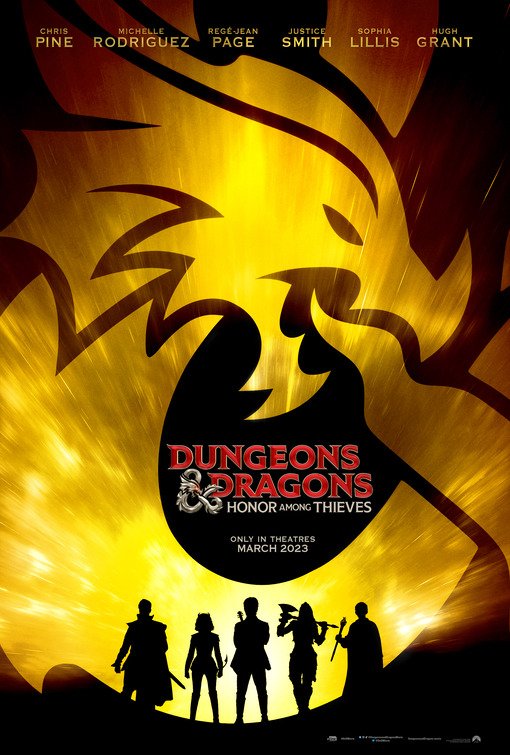
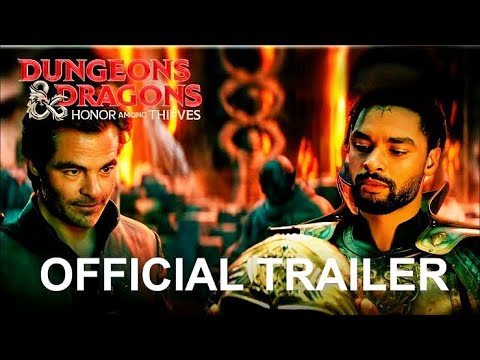
Honor Among Thieves does something a lot of tabletop-game adaptations fumble: it captures the specific, improvisational chaos of an actual D&D session rather than just borrowing the brand's monsters and magic. Directors Jonathan Goldstein and John Francis Daley structure the heist plot so that every spell and skill check feels like it's being used the way a clever player would use it, turning limitations into set-piece punchlines rather than plot conveniences. Chris Pine's bard-thief Edgin narrates with the self-deprecating charm of someone who knows his plans rarely survive contact with reality, which sets the tone for a film more interested in its characters improvising their way out of trouble than in delivering straightforward fantasy spectacle.
The ensemble is stacked with actors who understand the assignment: Michelle Rodriguez plays against type as a barbarian who wants out of the fighting life, Justice Smith's anxious sorcerer gets the film's funniest recurring bit out of a single unreliable transformation spell, and Hugh Grant, as a smarmy con man, is clearly having more fun than anyone else on screen. The film leans heavily on practical creature work and real locations rather than defaulting to green-screen fantasy, and that tactile quality — actors reacting to something actually built in front of them — gives even the CG-heavy dragon sequences a grounded sense of scale that most studio fantasy blockbusters skip.
A heist movie that plays like the best D&D campaign you never got invited to.
Production took the crew to Iceland, Northern Ireland, Ireland, and England, and during the Icelandic shoot the Fagradalsfjall volcano happened to erupt for the first time in 6,000 years — a genuine geological event the production incorporated into background plates rather than faking with visual effects. Because pandemic travel restrictions kept the principal cast from making the Iceland trip, local stand-ins filled in for wide shots while the actors' close-ups were filmed elsewhere and composited in later. ILM and MPC handled the heavier effects work, but the emphasis throughout stayed on practical creature builds augmented digitally rather than fully CG monsters, a choice that mirrors the film's overall preference for tangible craft over spectacle for its own sake.
Critics responded warmly, with the film landing in the low 90s on Rotten Tomatoes and a strong low-70s on Metacritic — reviewers repeatedly singled out the cast chemistry and the script's efficient world-building as rare strengths for a video-game-adjacent fantasy property. Box office results were softer than the reviews suggested they'd be, and Paramount ultimately didn't move forward with the planned sequel, which makes the film's warm reception feel a little bittersweet in hindsight. Even without a follow-up, it's become the reference point people point to when arguing that tabletop-game movies can work if the filmmakers actually understand what makes tabletop games fun.