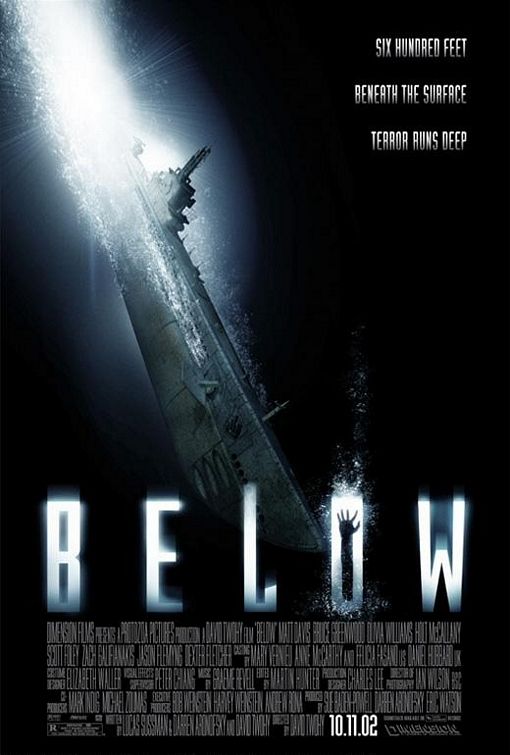
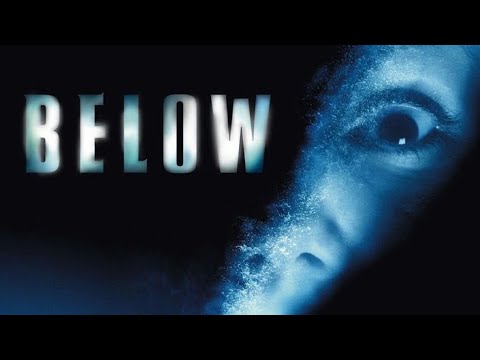
There's a particular kind of dread that only really works inside a submarine, where there's nowhere left to run and no way to know what's actually happening around the very next bulkhead, and this film understands that better than almost anything else in the genre. It commits fully to its claustrophobia, using the confined sets and constantly creaking metal to build tension the old-fashioned way, through sound design and careful suggestion rather than jump scares stacked on top of one another every few minutes of screen time, and the payoff feels earned rather than cheap.
David Twohy directs with real confidence in atmosphere over exposition, letting the mystery of what's haunting the crew unfold slowly instead of rushing to explain itself to an impatient audience looking for quick answers. The ensemble cast, particularly Bruce Greenwood as the newly acting commander, grounds the increasingly strange events in performances that take the escalating paranoia seriously rather than playing any of it for camp value or cheap laughs. It's a film that trusts its mood to do the heavy lifting, and that mood stays genuinely unsettling from the opening scene straight through to the very end.
Claustrophobic, haunted, and confident enough to let dread do the work.
This is a strong pick for anyone who wants old-school supernatural horror with a real sense of place, built more on tension and atmosphere than on gore or spectacle for its own sake. It remains a little underseen relative to its actual quality, and it rewards patience with a slow-burn payoff that lingers well after the credits finally roll, especially if you watch it at night with the lights off and no distractions nearby to break the spell it carefully builds scene by scene. Give it your full attention and it more than pays that attention back in full.
Below was released by Dimension Films, the genre-focused label of Miramax, arriving at a moment when submarine thrillers like U-571 and K-19 had recently found solid audiences, though this one distinguished itself clearly by leaning into ghost-story horror rather than pursuing pure wartime action set pieces. Its unusual production history as a reworked science-fiction script is a big part of what gives the finished film its distinctive tonal blend of period war drama and slow-building supernatural mystery, and that hybrid identity is likely part of why it never quite found the wide audience its evident craft deserved on original theatrical release.
Despite a well-regarded critical reception that praised its atmosphere and technical craft on release, the film underperformed commercially, a fate common to mid-budget genre films that go out without major stars attached to anchor a wider marketing campaign. In the years since, it has developed a modest but devoted cult following among horror fans who consistently single it out as a distinctive, unfairly overlooked entry in the relatively small submarine-horror subgenre, one that rewards close rewatching once you already know exactly where the dread is quietly heading throughout the whole voyage from start to end, right down to its final scene.