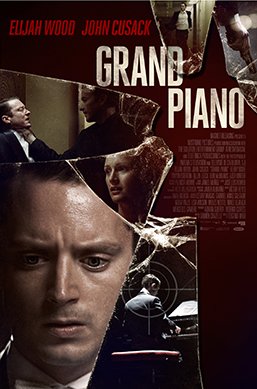
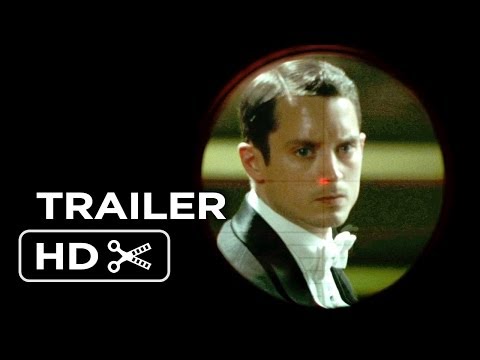
Grand Piano is a high-wire concept executed with real craft: a pianist forced to play a fiendishly difficult piece flawlessly, live, while a sniper watches through the scope of a rifle. Director Eugenio Mira treats the concert hall like a pressure cooker, using the camera to prowl the stage, the wings, and the audience with a restlessness that mirrors the character's rising panic. It's a film that understands its own gimmick and never overstays it, running a tight and efficient length that keeps the tension from ever slackening. For anyone who enjoys a thriller built on a single, sustained idea, this is a confident, well-engineered example of the form.
Elijah Wood carries almost the entire film through physical performance and reaction, since his character can't simply run or call for help without giving away the threat, and he sells the mounting dread convincingly. The device of the voice in his earpiece, later revealed as John Cusack, gives the film a classic one-on-one thriller structure, closer to a stage play than a typical action movie. It's a small-scale premise, but the filmmaking treats it with genuine seriousness, using sound design and editing rhythm, rather than dialogue, to build suspense around every keystroke.
One pianist, one gun, one wrong note — one of the tightest thrillers you'll find.
This is a great pick for a tense, compact watch when you want a thriller that doesn't sprawl, something you can finish in one sitting without a single dull stretch. It rewards viewers who appreciate a well-built genre exercise over sprawling plotting, and the classical music backdrop gives it a slightly more elegant flavor than the average high-concept thriller. Recommend it especially to fans of Hitchcockian setups, since the film owes a clear debt to that tradition of ordinary-person-in-an-impossible-trap suspense, updated with a modern, propulsive pace. It won't reinvent the genre, but it executes its one big idea better than most films even attempt.
Grand Piano was shot in Barcelona as a Spanish production, with Elijah Wood reportedly training on piano for several weeks beforehand so his hand movements and posture would read convincingly on screen. The film premiered at genre festivals before building a following on home video and streaming, earning solid reviews for a movie that easily could have collapsed under its own premise. Its score, built around the fictional composer's fiendish concerto, was recognized with an award at Spain's Premios Feroz, underlining how central the music itself is to the film's identity. It also marked a notable return to acting for Alex Winter, best known for Bill & Ted, in his first substantial film role in two decades.
Grand Piano sits comfortably alongside other lean, single-location thrillers that ask an actor to carry tension almost entirely alone, and it has developed a quiet cult following among fans of that specific subgenre. It's an easy film to recommend to people who normally find modern thrillers bloated, since its entire appeal rests on discipline: a short runtime, one setting, one ticking clock. Elijah Wood's post-Lord of the Rings career has been full of smaller, stranger genre choices, and this ranks among the most purely enjoyable of them. If you've ever wanted a thriller that treats a piano recital with the same nerve-shredding stakes as a bomb-defusal scene, this is the one to put on.