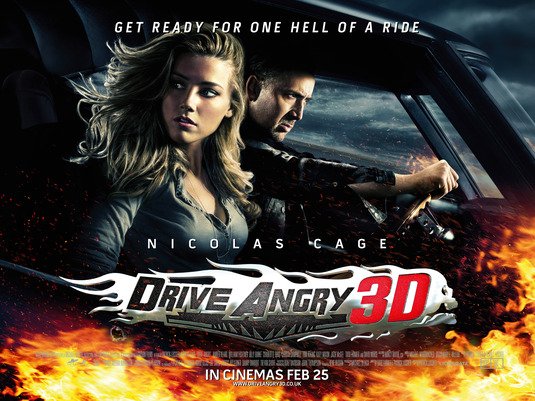
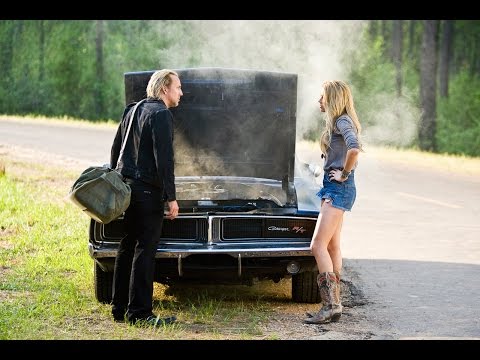
Drive Angry is not trying to be prestige cinema, and that's exactly why it works. This is Nicolas Cage at his most gloriously committed, tearing through the Deep South in stolen muscle cars with a gun, a granddaughter to save, and nothing left to lose. The premise is pure pulp - a man out of Hell, a satanic cult, a sharply dressed bounty hunter on his trail - and the film leans all the way into it instead of winking at the audience. Critics at the time were split and the box office numbers were rough, but time has been kinder to it. Approached as a lurid, over-the-top B-movie throwback, it delivers exactly what it promises.
What elevates the chaos is a cast that commits fully to the tone. Cage plays it dead serious even as the movie gets stranger by the minute, and that straight-faced conviction is half the fun. William Fichtner, as the enforcer sent to drag Cage's character back, steals scenes with a calm, almost bureaucratic menace that lands as darkly funny without ever breaking character. Amber Heard holds her own as the waitress dragged into the mayhem, giving the film a scrappy, grounded counterweight to all the supernatural noise. Director Patrick Lussier, working from a horror background, keeps the pace relentless and the action loud, practical, and unapologetically excessive.
Nicolas Cage drives out of Hell in a stolen muscle car, and somehow the movie earns every ridiculous second.
This is a film for a specific mood: late night, something loud and ridiculous in hand, not looking for restraint. If you enjoy grindhouse throwbacks, muscle-car chases, and genre actors clearly having a blast, it earns its cult reputation. It's not for viewers wanting a tightly plotted, tasteful thriller - the film wears its excess proudly. But taken on its own outrageous terms, Drive Angry is a good time, the kind of movie that gets better once you stop expecting it to behave. Cage completists and B-movie fans in particular should not skip it.
Drive Angry was directed by Patrick Lussier, who co-wrote the script with longtime collaborator Todd Farmer following their earlier work together on My Bloody Valentine 3D. The film reunited that approach: shooting natively in stereoscopic 3D rather than converting the footage afterward, then releasing it theatrically as Drive Angry 3D. Filming took place in Louisiana, including locations around Minden, Plain Dealing, and Shreveport, drawing on the state's production infrastructure. The supporting cast included Billy Burke, Charlotte Ross, and Katy Mixon alongside the leads. Despite the ambitious 3D production and a name cast, it opened to one of the weakest wide-release results of any 3D film that year, a rough debut for its theatrical run.
Lussier built his career on horror sequels and remakes handled with real craft, including My Bloody Valentine 3D and a White Noise sequel, and Drive Angry fits that lineage: genre material played straight rather than treated as a joke. What's kept the film alive years after its disappointing theatrical run is the same thing that sank it commercially - it refuses to modulate. There's no toned-down version of this story, and that commitment is exactly what home viewing and cult audiences have responded to since. It sits comfortably alongside other early-2010s Cage vehicles that flopped in theaters and found a second life on streaming, watched by viewers who came to it without box-office expectations and simply enjoyed the ride.