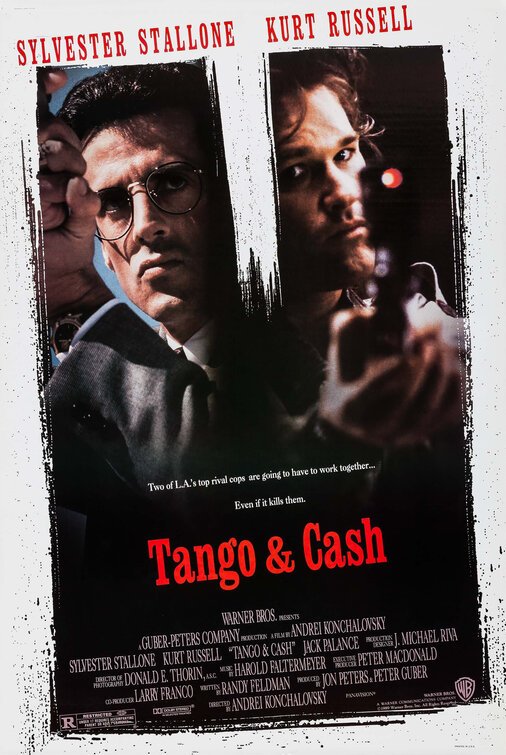
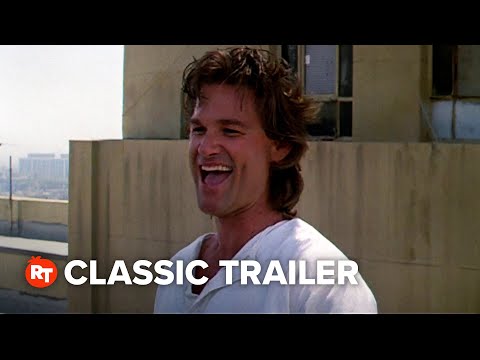
Ray Tango and Gabriel Cash are two of LA's best narcotics cops, and they can't stand each other — which is naturally the setup for a drug lord to frame them both for the same murder. Sylvester Stallone and Kurt Russell spend the movie handcuffed together by circumstance and mutual contempt, and the friction between their two very different tough-guy styles is most of the fun.
The plot is a delivery system for one-liners and prison-break shenanigans, and it knows it — nobody involved is pretending this is serious business. Jack Palance chews through his villain role with real relish, and the chemistry between the two leads carries scenes that would sink a lesser buddy-cop pairing. It's dumb in the specific, deliberate way that makes eighties action comedies rewatchable.
Tango & Cash never once takes itself seriously, which is exactly why it works.
The production history is famously messy — multiple directors, reshoots, a tonal tug-of-war between action and comedy — but somehow the finished movie holds together anyway. It's not smart, and it's not trying to be. What it delivers is two big stars clearly enjoying each other's company inside a plot that exists purely to get them there. Buddy-cop nonsense, done right.
Tango & Cash had one of the more chaotic productions of its era. Director Andrei Konchalovsky was let go partway through filming after repeated disagreements with producer Jon Peters over tone, with Peters pushing for broader comedy while Konchalovsky favored a more grounded approach, and two different cinematographers also departed before the crew found its footing. Editor Stuart Baird was ultimately brought in to oversee reshoots and a full re-edit, and the film reportedly reached theaters as barely finished prints just ahead of its December 1989 release. Despite the turmoil, it went on to turn a solid profit at the box office.
The film pairs Sylvester Stallone and Kurt Russell as bickering rival cops, a piece of stunt casting that plays on their contrasting star personas and fuels much of the buddy-comedy chemistry. It arrived near the tail end of the 1980s buddy-cop boom kicked off by films like Lethal Weapon, leaning harder into camp and one-liners than realism. Today it's remembered fondly as an unpretentious, quotable slice of late-'80s action excess, a film that never takes itself too seriously and rewards viewers looking for a purely entertaining odd-couple pairing.
Critics were not kind to Tango & Cash on release — it sits at a rough 31% on Rotten Tomatoes, with the consensus calling it "brutally violent and punishingly dull" and knocking a script that leans entirely on the two leads' chemistry to cover for thin jokes. Audiences clearly disagreed enough to matter at the box office: on a reported $54 million budget, the film pulled in more than $120 million worldwide, a comfortable profit despite all the behind-the-scenes chaos. Harold Faltermeyer, fresh off scoring Beverly Hills Cop and Top Gun, supplied the wall-to-wall synth score, and it's arguably the purest distillation of his glossy, tongue-in-cheek '80s action sound — all spectacle, zero restraint, and exactly right for the movie surrounding it.